


So you have a pet frog?
So you have a pet frog?
A brief guide to caring for your pet frog.
By: Gerry Marantelli So you have a pet frog. What will you feed it? What else does it need? Where will you keep it? How long will it live? I’m sure you have lots of questions – I know I did when I got my first pet frog. I hope now, more than 40 years later, I may be able to help you avoid some of the mistakes I made and provide a few tips that will help you to have a long and happy relationship with your new little amphibious friend. So let’s start with some basics: frogs are different to us. We have a dry skin that shields us from the outside world while a frog’s moist skin interacts with it, absorbing oxygen and even nutrients as well as expelling CO2 and other wastes. Frogs control their blood temperature using the environment; so they can’t warm up or cool down if they have no access to warmer or colder areas or items to absorb heat from or dissipate heat to. They mostly have a very simple rule for recognising food: if it moves and fits in my mouth I can eat it! So let’s look at how we can provide our pet frog with the things it needs.
gerry-marantelli
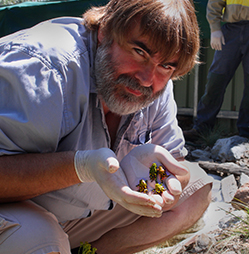
Gerry Marantelli is a frog conservation scientist specialising in frog breeding and reintroduction programs. He is the founder and manager of the Amphibian Research Centre and a globally recognised leader in amphibian husbandry. He advises zoos and other institutions worldwide on dozens of projects involving captive care of threatened amphibians.
gerry-marantelli
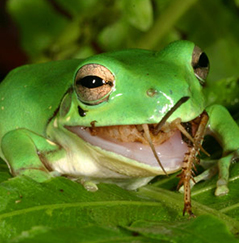
Frog Food
As I said: if it moves and fits in your mouth – go for it (the frog not you!) Frogs have a mechanism that favours recognition of horizontally moving items –why?: to avoid chasing raindrops and falling leaves! But after that, what they eat then depends on what is “moving†around in their natural habitat and their individual diets and digestive systems have evolved with this variation in mind. At home with your pet frog remember variety is the spice of life – so if you can please provide some, your frog will be grateful. Providing quality captive diets for frogs takes a little care but if you check out our you are what you eat page we will give you a great understanding of the issues of food quality for frogs and other insectivores. Below are some basics, but please find time to read you are what you eat; it will help you a lot.
•   Provide variety – go catch some wild insects, worms and other invertebrates. What’s safe? (LINK)
•   Supplement your food with calcium and vitamins. You can see our guide (LINK) for advice
•   Understand that lighting (LINK) and water (LINK) can have an impact on nutrition.
•   Buy your insects from the ARCade (LINK) and keep the insects well fed (see: you are what you eat (LINK)) this is not just promoting us – our insects ARE better (see why) (LINK)
How often?
We can all understand 3 meals a day because we get hungry – after all we use most of our food energy doing something frogs just don’t do: heating our body. Also a hot body runs all its processes at faster rates – demanding more food! So if your body sits at 37°C all day (like us) we need regular consistent amounts of food. Let’s take a frog’s eye view: there will be days and even seasons leading to times your frog is hot and others cold. A frog will get hungry more quickly when it’s hot and perhaps not at all when it’s cold. Also if you’ve ever dealt with a baby you will know they get hungry more quickly because they are using energy for growth. One last thing – One frog’s hot is another frog’s cold! So be aware of the temperatures your frog would usually be exposed to when you are deciding if they are hot or cold – a tip: activity can be a clue, active frogs moving around are usually “hot†and often looking for food. So how often should I feed my frog? The answer is when your frog is warmer and more active 2-3 times per week should be fine, when cold it may be only once a week or even less for some species.
How much?
Well, most frogs pig out when they can after all they don’t know when the next meal is coming! But that’s not all bad, they are used to it, it may even be good for them. I try to have the simple rule: if there are still insects running around the enclosure by the next day – you put in too many. A growing “hot†frog may eat 10% of its body weight each feed but an adult only 10% or less per week. Here is a basic guide to how much and how often based on frog age and activity phase (hot or cold).
Hot frogs |
Cold frogs |
|||
Still growing |
Adult |
Still growing |
Adult |
|
| How much food | 5-10% body mass | 5-10% body mass | 2-5% body mass | 2-5% body mass |
| How often to feed | 2-3 times weekly | 1-2 times weekly | 2-3 times weekly | Once weekly |
| UV lighting* | Good exposure required | Some exposure required | Moderate exposure required | Exposure made available at frog’s choice |
| Calcium and vitamin dust* | Use good covering every time | At least every 2nd feed | Use good covering every time | At least every 2nd feed |
frog-water
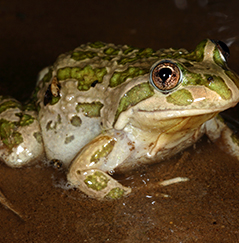
Frog Water
Maintaining water quality is an important part of frog husbandry. Mains water can have numerous chemicals that can effect frogs by damaging skin slimes, killing essential skin flora (good bacteria) or even effecting mineral uptake connected with bone formation. Treat frogs like fish, change part of the water at a time and keep it clean by filtration or manual removal of waste (eg dead insects and frog poo). A balance in your aquatic part of the frog tank can help too, plants bacteria etc all help cycle and remove harmful elements and with partial changes and cleaning of large waste particles you will have a more stable water chemistry. Here are a few tips:
- For big water areas with filtration 25% change each week (less for planted tanks).
- If doing bigger changes or clean outs use a dechlorinating mix (from any aquarium) best if it’s one mentioning skin slimes and secretions or with additives that support these.
- A healthy growth of plants in the water will help keep the water fresh and water changes will be needed less regularly.
- Understand not all frog species can climb out of water and up glass – design rocks/plants etc in corners of water areas to give swimming frogs a rest if they don’t easily see the way out.
Frog Heating
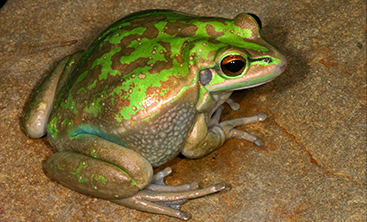
Whether you heat or not will depend on your frog’s needs and where you live. You can see our caresheets for a variety of species here. Most frogs will not be harmed by fluctuations in temperature so it is not essential to keep the enclosure permanently at one temperature. Letting temperature go up and down with the location while simply buffering the extremes will save energy, reduce your carbon footprint (helping wild frogs which I know you want to do) and give your frog a more natural set of conditions. A guide for Green Tree Frogs (the most common pet frog) would be:
- An aquarium heater in the aquatic area is a good move as it provides “wet†heat and has a thermostat that will only run the heater when needed. Get one with low settings so you can set to about 18°C.
- Set whatever heating you run to come on at 15-18°C this will stop your frog getting too cold
- Usually you will have the enclosure indoors – so high temperatures are probably not a threat. Or you will probably have some way of cooling the house for human comfort. 35°C is safe for Green Tree Frogs.
- The tank light will provide some heat – perhaps put it on at night when it is coldest, it will help with stopping the tank getting cold and maybe save on cheaper overnight power.
- If you live in areas that are cold you may need to set your water heater higher for a period of the year to allow your frog to get warm enough to have an active season.
Frog Habitat
A variety of different containers may be used to house frogs. They must be water proof and non-toxic making glass the best material. Any enclosure must be secure and escape proof. A tight fitting wooden or aluminium frame covered with fly-mesh provides the necessary ventilation and security while allowing the valuable UV light to reach the frogs. Use only fibreglass or PET (polyethylene) flymesh as steel or aluminium provide abrasive surfaces on which the frogs can injure themselves.
If you wish to have a land area for plants in your tank, it is important to ensure that it is well drained. Soil in aquariums tends to get waterlogged, and will both drown your plants and provide an ideal breeding ground for bacteria that produce wastes that can be harmful to your frogs. It is best to get a hole drilled in the land area of your tank, cover it over with mesh or an under gravel filter plate and place crushed rock or gravel then soil as you would in a pot-plant. Place a bucket under the hole to collect any water that drains through the soil. The best plants for your enclosure are those which will survive hot, humid, low light conditions. These are usually understorey plants from tropical rainforests. Species of Ficus, Spathophyllum, palms and some orchids and bromeliaeds will do well as will most indoor plants. If you wash the soil off the roots of Spathophyllum and some palm species they will actually grow in the water. More details regarding design and tank size etc for various species can be found in our caresheets. For Green Tree Frogs a standard 3ft (90cm) aquarium would adequately house three to four adult frogs.
- For big water areas with filtration 25% change each week (less for planted tanks).
- If doing bigger changes or clean outs use a dechlorinating mix (from any aquarium) best if it’s one mentioning skin slimes and secretions or with additives that support these.
- A healthy growth of plants in the water will help keep the water fresh and water changes will be needed less regularly.
- Understand not all frog species can climb out of water and up glass – design rocks/plants etc in corners of water areas to give swimming frogs a rest if they don’t easily see the way out.
frog-water
frog-water
Frog Light
Although most frogs are largely nocturnal many shelter during the day in areas exposed to sunlight. This means they nearly all have access to UV light which is an important part of the cycle that leads to better calcium levels and stronger bones. It’s so important we have a whole page dedicated to it here: Lights, calcium, action! Since there are many kinds of frogs and lights it will be best if you read our page, but at a minimum and with Green Tree Frogs as an example here is a guide: •   Fluorescent tubes are currently the best as they produce less heat (less risk of burnt frogs) •   Make sure it is a “reptile†and amphibian light with UV •   Make sure to check instructions and replace frequently (usually 12 months) as the UV drops •   Keep it positioned so frogs are exposed to it regularly (eg over branches where they rest) •   Make sure it is close enough to frog resting places for effective UV exposure (usually 10-40cm)
Frog Handling
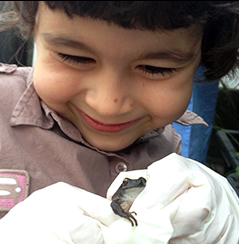
I understand – you want to cuddle your frog. Just be aware your frog may not always want to cuddle you! It will depend a bit on species, some are OK with cuddles (like Green Tree Frogs), but its best to remember if the frog is not looking relaxed or if it’s trying to get away, it’s time to put your frog back in its enclosure. If you need to handle a frog remember fist to wash your hands well – frog skin can absorb many chemicals and you need to be sure you have nothing but water on your hands. Either let your frog sit on your hand held flat (and stay close to the ground in case it jumps) or if it is a species that won’t do this remember all the strength is in its back legs, put those loosely stretched out on your hand, your thumb over them so when you close your hand to a loose fist the frogs legs are extended inside your first and its body and arms sit out on top of your hand. This will make sure your frog cannot hurt itself by the force of jumping while you are holding it.
gerry-marantelli
gerry-marantelli
How long do frogs live?
Well you may think I’d be the person to ask – I’ve run the Amphibian Research Centre for over 20 years – surely I’ve seen frogs die of “old age� Well I’ll give you my simplest answer: most of them live vastly longer than you would guess! Guinness Records has the oldest ever dog listed at 29 years, for cats it’s 38 – I can tell you there are frogs that will beat that so we are talking about serious pet commitments! Currently at ARC we have numerous frogs over 20 – they have been here since we started, and others that came as wild adults (so we know their minimum age on arrival) add that to how long they’ve been with us and we get:
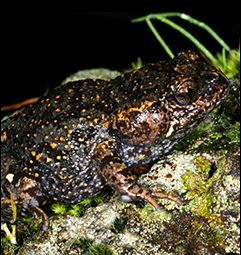
- Dirk – the last NSW Spotted Tree Frog, at least 21 (alive in 2015 at time of writing)
- Erica – a Growling Grass frog lived 22 years but she died in a mishap (not old age) when ARC relocated
- Gillie – a Corroboree Frog that came to us as an adult (minimum 5 years in 1998) still going strong in 2015 at 23 years young (I can’t even see any signs of age! Not one grey hair!)
- There are Green Tree Frogs that have lived over 25 (we have 20+ year olds)
- And some toads (also frogs) that have recorded 40+!
- There are even Salamanders that likely live 100+ years
- And I’m certain we have not yet seen just how old frogs can get – maybe you and your frog will create a new record!
When things go wrong.
When I was younger, a phone call to the vet would usually result in laughter or silence at the other end of the phone: – “you want me to see a what?†“did you say frog or dog?†More than once I was told it will be cheaper to catch or buy a new one! Fortunately for all of us (and most especially the frogs) this attitude to wildlife is no longer acceptable and is also now very rare. There are also now many good vets with special expertise in small animals, wildlife and even frogs! We now understand much more about frogs and their illnesses and vets can often help if things do go wrong. However if you practice good care – follow the information here or in our other species caresheets, this will be very seldom and keeping a frog for 20 years is likely to be cheaper in vet fees than keeping a dog or cat for even 1 year! I cannot stress enough – if your frog has a medical problem – go to one of our recommended vets (sooner rather than later). They can help.
frog-vets